


Behind Our Clothes: Science, Craft and Sustainability in Nagoya

Updated: 15 hours ago
A new exhibition in Nagoya brings clothing production and regional textile knowledge into public view. For fashion educators, its programme raises a useful question: what should people learn from a garment before deciding whether it is sustainable?
An exhibition at FUJI Nagoya Science Museum opened on 31 October, bringing the science and cultural history of clothing into a setting familiar to everyday shoppers. Organised by Nagoya City Science Museum, The Other Side of Clothes「服のウラガワ、お店します」invites visitors to consider what lies behind the clothes they wear. Its official programme connects production, regional craft and environmental questions. [1]


Nagoya City Science Museum exterior.
Photograph: Evelyn-rose
Learning through garments
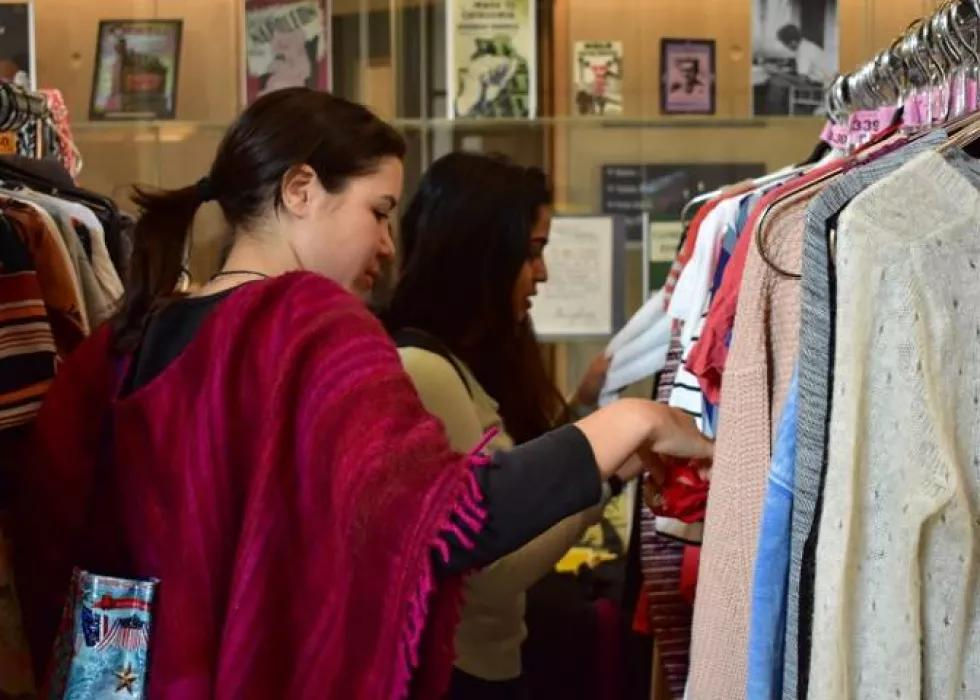
The museum describes a venue arranged like a select shop, where visitors can look at, touch and try on selected items. Objects, factory footage and photographs trace the making of a shirt from fibre to finished garment. [1]
For SUSFUTURE, the educational promise lies in starting with something tangible. A garment gives teachers a shared object around which to discuss unfamiliar processes. Questions about fibre, construction and use can begin with observation rather than a sustainability label.
Touch and trial alone cannot establish environmental performance. Their value is as an entry into questions that require further evidence: how was the material processed, what care does it need, and what might help it remain useful?

Japanese hand loom at the Toyota Commemorative Museum of Industry and Technology, photographed in 2010. Photograph: Motokoka
Regional knowledge in contemporary clothing
The programme features Arimatsu-Narumi shibori, Nagoya black formalwear dyeing and Nagoya yuzen, alongside Bishu wool textiles and Mikawa cotton. It also includes work by Kagonotori's Shoji Fujii exploring form through textiles inspired by shibori. [1]
An exhibitor announcement provides a specific example. Yamakatsu Senko states that its Nakamura Shoten brand is presenting and selling garments including long shirt dresses made using Nagoya black dyeing techniques, with some available to try on. This is a participant's account, not an independent review. [2]
The connection between exhibition and retail deserves attention. Trying a garment may help visitors relate a technique to fit and everyday use. Yet an opportunity to buy does not demonstrate more responsible consumption. A useful educational question is whether the encounter helps someone make better use of clothing they already own.
SUSFUTURE sees a further distinction worth maintaining: cultural continuity and environmental performance need separate explanations. A traditional technique can carry significant knowledge and skill. Its age or local origin does not, on its own, establish lower water use, safer chemistry or longer product life.

Arimatsu shibori: bound cloth and a dyed Miura-shibori example, photographed in 2020. Photograph: 漱石の猫

A beginner's karamatsu-pattern shibori sample after thread removal and before finishing, photographed in 2020. Photograph: 漱石の猫
Three participants worth looking more closely at
Nakamura Shoten: black dyeing beyond formalwear
Yamakatsu Senko's exhibition announcement identifies its Nakamura Shoten label and its black-dyed shirt dresses. Its wider product range provides useful context: T-shirts and scarves translate formalwear dyeing into everyday clothing. The brand also describes scarves woven and dyed in Aichi, using Chita cotton or Bishu wool. These catalogue examples illustrate the company's wider practice; their presence in this exhibition has not been confirmed. [2, 6]
Shoji Fujii and Kagonotori: following a design through its making
A profile published by International Design Center NAGOYA describes Fujii as a designer working across clothing, kimono and spatial projects, handling the process from design to dyeing himself. Kagonotori's own Storks website identifies the practice as a dyeing artist duo of Shoji Fujii and Chihiro, combining design, binding and dyeing. [7, 8]
That background gives educators a useful way into the exhibition: follow decisions made between an initial idea and a finished textile. SUSFUTURE's interest is in making this knowledge visible, including the judgement and experimentation involved, rather than treating a craft technique as decoration.

An Arimatsu shibori garment showing a folded-and-stitched pattern, photographed in 2020. Photograph: 漱石の猫
UZUiRO: a background in working with surplus textiles
Uzu Japan, named among the museum's cooperating organisations, operates the UZUiRO clothing brand. Its profile on Nishio City's SDGs partner website describes locally woven cotton, dyeing and the MOTTAiiNA initiative using surplus fabric and yarn from regional textile factories. It also lists uses for cutting scraps and educational workshops. These are organisation-supplied descriptions on a municipal platform, not an independent environmental audit. The current exhibition's precise UZUiRO product selection has not been established. [1, 9]
For SUSFUTURE, this is a more concrete discussion point than a general claim about natural materials: what was left over, how was it used, and did the resulting garment find a useful life? Those questions connect craft education with resource use while leaving room to examine evidence.
What distinguishes this presentation?
The museum's published past-exhibition list and our title searches did not identify an earlier edition of this exhibition. That does not prove it is the first: we therefore make no claim that it is annual, inaugural or an improvement on a previous edition. [10]
The distinctive editorial thread in the current programme is the connection between a familiar shopping format, regional production knowledge and questions about clothing's environmental effects. The participants above offer routes into that conversation through dyeing, design practice and surplus materials. Their inclusion is not evidence that every represented product is sustainable.
A timely opportunity to investigate fibres
The Japan Wool Industry Association has separately announced Wool Hiroba and Wool Lab activities at the museum on 3 November. Its programme combines opportunities to handle wool with experiments examining its properties. Wool Hiroba requires no reservation; Wool Lab requires advance registration and has age-specific sessions. Current places should be checked with the organiser. [3]
These activities offer a practical connection for educators planning a visit. Experiments can make a fibre's properties easier to discuss, provided the conclusions stay within what was actually tested. For SUSFUTURE, a material lesson becomes stronger when learners record the sample, method and limits of a comparison before making broader sustainability claims.
What can be said about the exhibition so far?
As of 1 November, our searches of publicly accessible Japanese-language coverage had not identified a verifiable independent visitor review. Tokyo Art Beat's dedicated comments page displayed no comments or ratings when checked. Its event listing, tourism listings and exhibitor announcements establish visibility, but do not establish visitor satisfaction or learning outcomes. [4]
This limits the assessment we can responsibly make. The published programme offers a promising connection between material knowledge, craft and public education. It does not yet tell us how clearly visitors understand those connections, or whether the experience affects later clothing choices.
Teachers could use three follow-up questions after a visit: Can students explain one production process? Can they distinguish a material property from an environmental claim? Can they propose a care, repair or use decision and identify the evidence needed to support it? These are SUSFUTURE's suggested learning prompts, not reported outcomes of the exhibition.
Planning a visit
• Dates: 31 October to 15 November 2026.
• Closed: 2 and 9 November.
• Hours: 09:30 to 17:00; last museum admission at 16:30.
• Venue: FUJI Event Hall, Basement Level 2, Science and Engineering Building, FUJI Nagoya Science Museum, Nagoya, Japan.
• Admission: No additional exhibition charge, but the applicable museum admission fee is required. [5]
References
1. Nagoya City Science Museum. 企画展「服のウラガワ、お店します」. Official exhibition programme. https://www.ncsm.city.nagoya.jp/visit/attraction/special_exhibition/post_88.html
2. Yamakatsu Senko. (29 October 2026). FUJIなごや科学館 企画展「服のウラガワ、お店します」に出店します. Exhibitor announcement. https://yamakatu.co.jp/news/15142
3. Japan Wool Industry Association. (17 October 2026). FUJIなごや科学館(名古屋市科学館)でウールひろば&ウールラボを開催します!. Activity announcement. https://yosankyo.jp/news/event/915/
4. Tokyo Art Beat. 「服のウラガワ、お店します」: comments. Review-status check, not a visitor review. https://www.tokyoartbeat.com/events/comments/list/-/Behind-the-Clothes/nagoya-city-science-museum/2026-10-31
5. Nagoya Convention & Visitors Bureau, Nagoya Concierge. 企画展「服のウラガワ、お店します」. Official visitor information. https://db.nagoya-info.jp/event/detail/1440/
6. Yamakatsu Senko. Nakamura Shoten. Brand product catalogue. https://yamakatu.co.jp/staining
7. International Design Center NAGOYA. Cross the Crafts. Separate event announcement and participant biographies. https://www.idcn.jp/projects/design-city/4681/
8. Storks / Kagonotori. About. Artist and brand self-description. https://storks.theshop.jp/about
9. Nishio City, SDGs 17 Nishio. Uzu Japan partner profile. Organisation-supplied practice descriptions. https://sdgs-17nishio.jp/partnerlist/entry-584.html
10. Nagoya City Science Museum. Past special exhibitions. https://www.ncsm.city.nagoya.jp/visit/attraction/special_exhibition/past.html
All sources accessed 1 November 2026.

Comments